I want to see Him, too!


Lofty lectures, full of fact.
Useful information, yet…
I feel talked to versus joined.
A boundary invisibly set…
Or, so it seems.

The Greek stated: “Sir, I would like to see Jesus.”
I want to see Him, too!
I come in anticipation.
I hear information about Him.
Yet, it seems veiled.

I saw Jesus through Pastor Pettitt.
He oozed Jesus.
His way enticed, intrigued…
And, whetted appetite and thirst
that had never been slaked.

It was Pettitt’s way that started my journey.
To know others like Pettitt.
To know the Jesus Pettitt knew.
That others might see Jesus in me.

Richard L. Brewer

Rip currents

Rip tide

“The dreaded ‘rip tide’ does not have anything to do with tides, so professionals prefer the term ‘rip current.’ A rip current is a long, narrow band of water that can pull swimmer away from shore and out to sea in just a few seconds. Rip currents are dangerous, and it’s best to learn how to identify and stay out of them. If, however, you get caught in a rip current, the right response gives you a big advantage.” https://www.wikihow.com/Survive-a-Rip-Tide.

We have been to the beach: Santa Rosa Beach, in the panhandle of FL. Remarkably beautiful. White sand. Emerald water. Beauty, enjoyment, and potential danger. Flags are flown to provide information: green, yellow, or red. Green means no danger of riptides. Yellow, be cautious. Red means danger. There are also tell-tale signs to look for. There are specific suggestions about how to survive if caught in one. In short: do not fight it, swim parallel to it. So much like life. There are riptides in life. There are not always “flags” to warn of the potential danger. The ill-prepared are sucked out to sea. Even the prepared can be sucked out to sea. The ones who fight the rip currents are at risk of drowning. Swimming parallel to them allows one to swim to calmer water. Of course, there is always the option of calling for help.

So much like life. Rip currents are everywhere. They are inevitable. I have known people who have been sucked in quite often; not because of their own decisions, but simply a result of living life. I have been in a few rip currents myself. Fighting them has not proven to be the best course of action. Swimming parallel to them and calling for help have been my best options.

My “go-to” has been God. Jesus said: “I have told you all this so that you may have peace in me. Here on earth you will have many trials and sorrows. But take heart, because I have overcome the world.” (NLT). Isaiah stated as inspired by God: “When you go through deep waters, I will be with you. When you go through rivers of difficulty, you will not drown. When you walk through the fire of oppression, you will not be burned up; the flames will not consume you.” (NLT).


Suicide III

skeleton

My son’s best friend committed suicide five weeks before his own death in an accident. Evan was devastated. He did all the right things. Evan, in essence, established a “safety plan” with his best friend. His best friend agreed to it and promised to make contact with him, the school counselor, call the crisis line, and/or call me if he should ever be suicidal. His best friend did not honor the commitment.

Evan and his best friend worked at the same place and the same shift. They enjoyed a good evening and ended the evening with a rubber band fight. They laughed and enjoyed the time together. By all appearances, his best friend was doing extremely well. The next morning, Evan was called to the principal’s office to be told the dreadful news: his best friend had gone home and hanged himself with his guitar strap.

Pay attention to any extraordinary improvement/change in another’s mood and behavior if he/she has been suicidal. Evan’s best friend’s behavior illustrates that interesting phenomenon: when mood lifts and energy increases a person is at a high risk for suicide. This may sound strange. But, it is not uncommon. There are speculations as to why this happens: The person may have experienced some improvement in his/her mood, have the energy to follow through with suicide, and are unwilling to return to the depths of depression he/she had experienced. Or, the person may have made the decision to commit suicide and feel relief that he/she is able to escape the dreadful despair that been the way of life. Remember, it is always appropriate to re-ask the question, “Are you thinking of ending your life”.

Avoid unfair, unkind, unloving, and off-putting comments, assumptions, conclusions, and judgments. I recently heard an individual say that suicide is “self-murder”. Those who have lost loved ones to suicide will find that hurtful and non-empathetic. In no way is a comment like that compassionate or helpful. Be careful to not judge or moralize with someone who might be contemplating suicide. By all means, never call anyone’s bluff. Avoid shaming, express empathy and love. It can be very helpful to ask who is important to them and who would be impacted by their death. I have found it useful to remind the person that should he/she commit suicide, h/she leaves his/her psychological skeleton in his/her survivors’ closets. The only way to escape that skeleton is to follow the path of suicide.

I have provided a small amount of information and “advice” on suicide. I hope it has been helpful. Feel free to contact me with questions, concerns, or struggles.

Suicide II

According to the Center for Disease and Prevention, suicide is the 10th leading cause of death in the U.S. The top 10 are listed below:

Heart disease: 633,842
Cancer: 595,930
Chronic lower respiratory diseases: 155,041
Accidents (unintentional injuries): 146,571
Stroke (cerebrovascular diseases): 140,323
Alzheimer’s disease: 110,561
Diabetes: 79,535
Influenza and pneumonia: 57,062
Nephritis, nephrotic syndrome, and nephrosis: 49,959
Intentional self-harm (suicide): 44,193.

https://www.cdc.gov/nchs/fastats/leading-causes-of-death.htm

In 2016, the highest suicide rate (19.72) was among adults between 45 and 54 years of age. The second highest rate (18.98) occurred in those 85 years or older. Younger groups have had consistently lower suicide rates than middle-aged and older adults. In 2016, adolescents and young adults aged 15 to 24 had a suicide rate of 13.15. https://afsp.org/about-suicide/suicide-statistics/

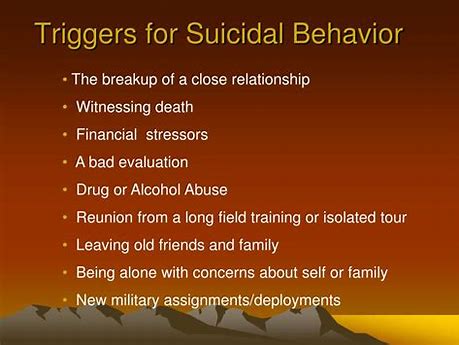
Numerous warning signs have been noted. Some of the more common are listed below.

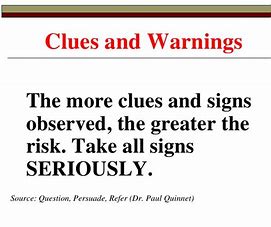
“Suicide threats. Previous suicide attempt. Alcohol and drug abuse. Statements revealing a desire to die. Sudden changes in behavior. Prolonged depression. Making final arrangements. Giving away prized possessions. Purchasing a gun or stockpiling pills. The more clues and signs observed, the greater the risk” (http://scshare.com/downloads/MHA_QPR.pdf).

The warning signs are often best seen in retrospect. If there is any concern whatsoever, it is best to ask the person if he/she in contemplating suicide. How might you do so? Simply ask. Asking will not give the person the idea. It provides permission to talk about the desperation. It is completely okay to ask a direct question, such as: “Are you thinking about suicide?” Any other semblance of the question can also open dialogue, such as “Are you thinking of hurting yourself?” Again, remember, asking the question provides opportunity for conversation and help.

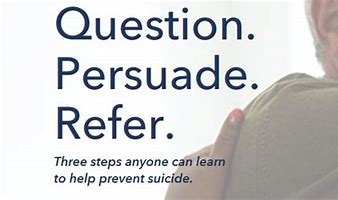
There is no need to go it alone: there are many helpful resources to assist. One particularly useful resource is the QPR Institute. Their mission is: “To save lives and reduce suicidal behaviors by providing innovative, practical and proven suicide prevention training. We believe that quality education empowers all people, regardless of their background, to make a positive difference in the life of someone they know”. The acrostic QPR is used to prompt for important elements of intervention. “QPR stands for Question, Persuade, and Refer — the 3 simple steps anyone can learn to help save a life from suicide. Just as people trained in CPR and the Heimlich Maneuver help save thousands of lives each year, people trained in QPR learn how to recognize the warning signs of a suicide crisis and how to question, persuade, and refer someone to help. Each year thousands of Americans, like you, are saying “Yes” to saving the life of a friend, colleague, sibling, or neighbor”, https://qprinstitute.com/ .

More to follow in a subsequent post.

Suicide I

Suicide has been in the news again, this time regarding Anthony Bourdain and Kate Spade. According to The Center for Disease Control and Prevention, suicide rates have increased by 30% since 1999 with the middle-aged having the most suicides and the greatest rate of increase. Alarming statistics.

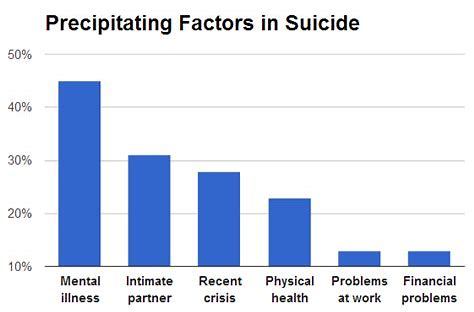
Suicide is derived from the Latin word “suicidium” which is defined as “the act of taking one’s own life voluntarily and intentionally” (https://www.merriam-webster.com/dictionary/suicide). Why would one decide to end his/her life by suicide? Are they mentally ill? For a person to commit suicide indicates that there is something gravely wrong in that person’s life. Mental illness is the most common correlate to suicide. Of the mental illnesses, depression is the one most commonly linked to suicide.

Suicide has been referred to as an inarticulate call for help. It has also been suggested that those who commit suicide are ambivalent about dying. It has been suggested that most of those who end their lives by suicide are characterized by three “Hs”. They feel helpless, hapless, and hopeless. Those three “H” words may very well sum up the felt darkness that compels people to “voluntarily and deliberately end their lives”. It is miserable to live without any hope that things might get better, to feel stuck or trapped in a morass of misery. Shame, regret, guilt, emotional and physical pain, feeling like a burden, worn out from the same drudgery of living, knowing one is going to die and not wanting to experience the intense pain. The list could go on. But back to mental illness.

Why such a stigma attached to “mental illness”? There is no such negative connotation attached to physical illness. Sadly, there remains a very strong stigma when it comes to mental illness. That is so unfortunate! People should not be stigmatized for having a mental illness. Surely, everyone has been physically ill. In the same vein, it would surprise me to find a person who has not suffered from mental illness. I personally know what it is to have mental illness and to be treated for it. Untreated mental illness is costly and can be fatal. Suicide is one potential outcome.

Those who commit suicide cannot be interviewed. But, much can be discovered by conducting a psychological autopsy. Some additional indicators that have been associated with imminent suicide include: lack of connection, inability to think clearly, death seen as a viable way out, and the list could go on and on. Though I never seriously thought of taking my life, I have begged for God to take me out. He did not cater to my pleas. At the time, I was angry that He did not accommodate me. If wishing and praying to die were sufficient to end life, I would have been dead decades ago. Life was purely miserable in so many ways. Yet, life was incredibly blessed as well. The pain of misery overshadowed the good. Though fragile, my faith, as well as not wanting to devastate those I loved, kept me from doing the irreversible.

More in the next blog re: what to look for, what to do, and what not to do.

Mammon

weevil

Mammon

The love of money, the root of all evil,
Eating the soul like a ravenous weevil.
Many are consumed by lust for more.
Accumulated mammon rotting the core.
The motto of life, with hiss and a spit,
“Get all you can and can all you get”.
Tear down old barns, no need for replevin.
While decreasing the odds of entering heaven,
A parable with camel, Jesus did mention,
The aim of the story this pointed intention.
The chances of heaven are summed by this creedal:
“It would be easier to poke its eye with a needle”.

Richard L. Brewer
09/26/2013


Goliath


sling and stones

Stoned and beheaded

For forty days, Goliath came and he dared.
God’s army ran in fear and with dread.
“What will be done for the man who kills this Philistine
The one who removes this disgrace from Israel?”
Audacious David wanted to know.
His brothers indignant boiled.
“Why have you come down here?”
“With whom did you leave those few sheep?”
“How conceited you are and how wicked your heart!”
“You came down only to watch the battle.”
“Whoa!” said David. “Now what have I done?” “Can’t I even speak?”
What diminutive David asked was reported to Saul, and Saul summoned.
Audacity the more: “Let no one lose heart on account of this Philistine; your servant will go and fight him.”
Saul warned the boy, “You cannot fight that Philistine and fight him; you are only a young’un. He has been a warrior from his youth.”
“Oh, but I can because of Who I represent!” the herder of sheep proclaimed.
Saul to David: “Go, and the Lord be with you. But, take my armor.”
Clumsily, he walked: The armor and helmet would not do.
With staff and stones he neared the giant.
“Am I a dog to play with sticks?” the mighty taunted.
“I’ll give your flesh to the birds and beasts!”
David, undaunted replied to the foe so mighty:
“I come in the name of the Lord Almighty!”
From a walk to a run, a stone from his pouch!
Tethered, swung, and released from the sling toward Goliath:
The stone sunk in his head and he fell on his face.
Down, dazed, and about to die.
David took hold of the sword, drew it from the sheath, and cut off his head.
King Saul was mystified: “Abner, whose son is that young man?”
Alas, Goliath was on the wrong path and got stoned.
He was on the wrong side and lost his head.
He boasted and was be-headed.
“Bring it on!” He had gloated and roared.
To be downed by a single stone from the sling of a servant.
Be careful the side, be careful the cause!
There are numerous giants:
Not just thundering, but enticing.
Not knowing, or speaking the truth, we Go-lieth with Goliath.
Take heed!
Lest your head rolls and the bell tolls destruction.

Richard L. Brewer


I Samuel 17

33-37: Saul replied, “You are not able to go out against this Philistine and fight him; you are only a young man, and he has been a warrior from his youth.”
34 But David said to Saul, “Your servant has been keeping his father’s sheep. When a lion or a bear came and carried off a sheep from the flock, I went after it, struck it and rescued the sheep from its mouth. When it turned on me, I seized it by its hair, struck it and killed it. Your servant has killed both the lion and the bear; this uncircumcised Philistine will be like one of them, because he has defied the armies of the living God. The Lord who rescued me from the paw of the lion and the paw of the bear will rescue me from the hand of this Philistine.” Saul said to David, “Go, and the Lord be with you.”
55: As Saul watched David going out to meet the Philistine, he said to Abner, commander of the army, “Abner, whose son is that young man?”