
Truth accurately describes reality. That simple statement sounds almost self-evident, yet one’s ability to accurately perceive reality is often more complicated than we would like to admit. We use tools to help us determine whether our perceptions are accurate. A tape measure reminds us to “measure twice and cut once.” A level tells us whether something is plumb or whether we are half a bubble off—or sometimes a whole lot more.
Mathematics is often regarded as the closest thing to proof and certainty that human beings possess. Mathematical conclusions are derived through formal logic from explicitly stated axioms—propositions regarded as established, accepted, or self-evidently true. If the logic is valid and the premises are true, the conclusion necessarily follows. Yet even mathematics has its limits as a metaphor for human knowledge. We rarely have complete information, and our perceptions, assumptions, and interpretations are not always accurate.
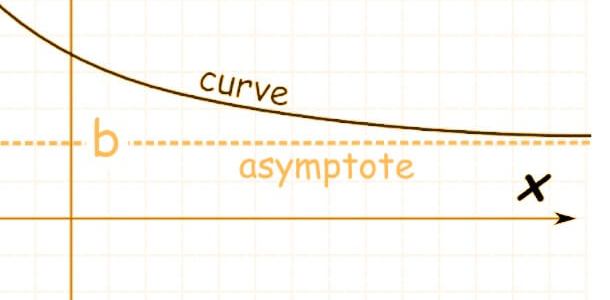
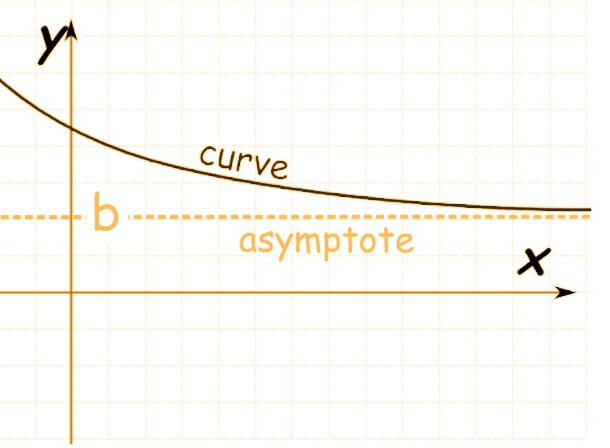
This brings us to the idea of an asymptote. In mathematics, an asymptote is a line that a curve approaches arbitrarily closely but never actually reaches or reaches only at infinity. The concept has sometimes been used metaphorically in philosophy and theology to describe our pursuit of truth or perfection: we can progressively get closer, but we never possess complete knowledge or attain absolute perfection.
That is an important perspective when we consider impostor syndrome. We are continually trying to bring our perception of ourselves into alignment with reality. Sometimes our self-perception is inflated. At other times, it is painfully diminished. The goal is not to convince ourselves that we are better than we are, nor to persuade ourselves that we are worse. The goal is accuracy.
Even two magnets provide a useful metaphor. Depending upon how they are oriented, they either attract or repel one another. The problem may not be with the magnets themselves but with getting the right ends lined up. In much the same way, impostor feelings can arise when our perception of ourselves is not properly aligned with the evidence of reality.


