More cowboy

thDHJ8CXDF

On the Range

Pasty beans.
Gritty coffee.
Dust storms.
Coyote howls.
River crossings.
Finding strays.
Thankless labor.
I think not.
Jesus herds.
So ought we.

Richard L. Brewer
10/06/2009

Cowpokin’ Fun

Ropin’ doggies.
Spittin’ tobaccer.

Scratchin’ bites.
Eatin’ dust.

Meanin’ of life
Is so robust.

Smellin’ odors:
Sweat, leather, manure.

Seepin’ through ‘stache
Stench is pure.

Punchin’ cattle,
Fun fer sure.

Richard L. Brewer
10/05/2009


Superb Cowboy

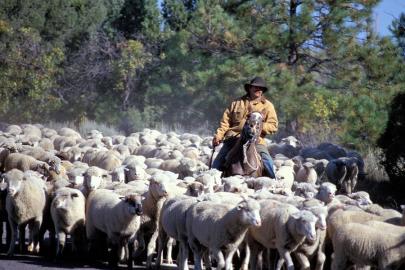
herding-sheep-in-colorado-carl-purcell

Once again, I found myself engaged in imagination. No, Jesus was not a cowboy. But, I am confident He did not look like most pictures portray Him. He was not a Fabio type. He was “a man who learned obedience through suffering”, Hebrews: 5:8 and “A man of sorrows acquainted with grief”, Isaiah 53:3. Why? Because of His assigned role from before the creation of the world: to become the redeemer for us who had been separated from God. He became sin for us. He went out into, and got dirty as he walked in, the cesspool of the world so to rescue those in the cesspool. I am one of those. You are, too. No one is exempt from the cesspool. He came to redeem. If he draws, John 6: 44, 65, respond. He got down and dirty to seek and save those who are lost. That means everyone. Anyway, my imagination created the following:

Superb Cowboy


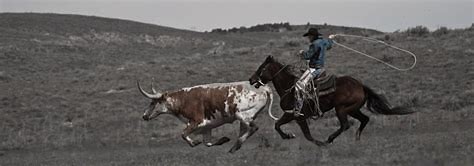
Boulders, Cacti, Sand, Dust.

Cow patties. Bellows. Snorted mucus.

Chaps. Boots. One hat.

Simple meals of beans and hash.

No nice place to lay my head.

Roundin’ up cattle.

Tamin’ doggies.

Bringin’ in the herd.

Kinda like Jesus.

But, His charges were sheep.

He, too, dealt with the dung, baas, and snot.

His meals were simple.

He shared with others and had bounty.

He rounded up errant sheep.

He brought in the flock.

He said foxes have holes.

And the birds have nests.

But, the Son of man had nowhere to lay His head.

No fancy dwellings, but the harshness of life.

Jesus would have made a superb cowboy!


Richard L. Brewer 02/27/2013


Autobahn extension


A construction project in Germany was started to lengthen the German federal motorway known familiarly as the Autobahn. In doing so, it was necessary to move a very old cemetery. It was controversial because some very famous musicians had been buried there. Archaeological curiosity, being what it is, it was decided that some caskets would be opened. Several musicians were discovered to be decomposing. In other caskets, only bones remained. Some museum archaeologists decided to reassemble the skeletal remains. The lead archaeologist made it very clear that only one reassembly was desired: “If is not Baroque, don’t fix it.” This left the other archaeologists incensed and feeling flat. “Shouldn’t you take it up with the rest of the staff” were the disgusted retorts. The lead archaeologist, being very well versed in the field, retorted in a sharp tone, “I take note of your displeasure, but it is I who have the finale say.”

Upon completion of the Autobahn extension, a big celebration was planned. Several celebrities were invited. Of those, three aging action heroes were showcased: Bruce Willis, Sylvester Stallone, and Arnold Schwarzenegger. Having been told of the musicians whose graves were opened, each of the aging men decided to dress up like musicians. Willis decided he would be Beethoven, Stallone decided to be Tchaikovsky. Arnold very loudly proclaimed, “I’ll be Bach!” The celebration was a great success as evidenced by the chorus of cheers. And, as Paul Harvey would say, “That is the rest of the story”.

Crooked ear

crooked ear“And one of them (Peter) struck the servant (Malchus) of the high priest and cut off his right ear. But Jesus said, “No more of this!” And he touched his ear and healed him”: Luke 22:50-51, ESV.

My imagination takes me places. As I read this event, I imagined the scene: Jesus betrayed by Judas, Peter coming to Jesus’ defense, lopping off Malchus’ ear, then Jesus intervening and performing His last miracle. Wowzer. What if the healing left Malchus with a tilted ear? Of what would he be reminded every time he touched it or looked at it in the mirror? Well, here goes my imagination.

Crooked Ear

Malchus shuddered
With pain and fear.

When in the garden
He lost an ear.

Peter lopped it with his sword
By Jesus’ touch, it was restored.

Jesus plucked it from the sand and dirt
Relieved was Malchus of his hurt.

A vivid memory Christ did plant
When He fixed the ear, but with a slant.

So, every time, when in a mirror he looked
Malchus saw that his ear was crooked.

Reminded him always, of that very event;
And, that Christ was the Savior, Who God had sent.

At first a tragedy, or so it seemed
But it led Malchus to be redeemed.

Richard L. Brewer

Vitruvian #2

the-vitruvian-man


Shortly after the poem (remember, I use the term loosely), I penned the following.

Godly Proportions

Neither height nor breath.
Neither east nor west.
No measurement is known.
But, God uses plumb lines.
His Truth knows no error.
His Spirit woos the crooked.
And, makes paths straight;
To make the errant new.
Much greater than even Vitruvius could have imagined.

Richard L. Brewer
12/31/2017


Vitruvian Man

the-vitruvian-man

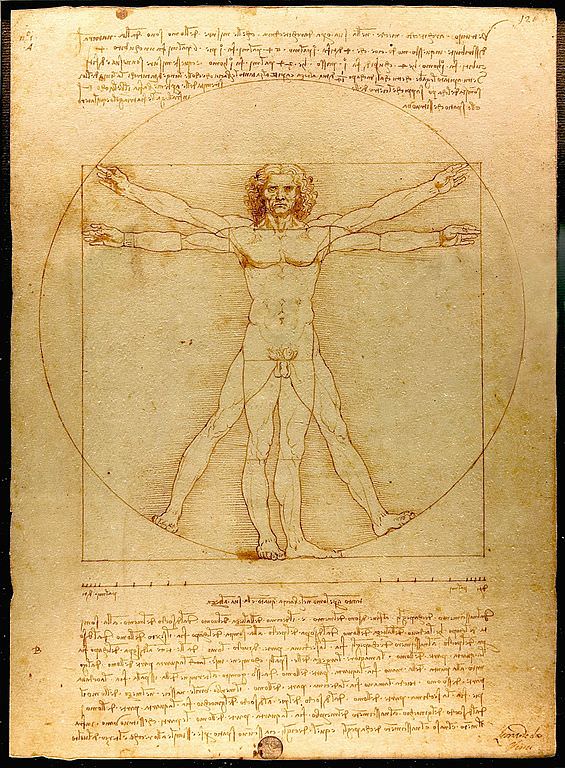
My dear friend, and real poet, Mark Tappmeyer, recently emailed me to let me know he was reading Walter Isaacson’s Leonardo da Vinci, and that he had come across the discussion of Leonardo Da Vinci’s drawing of Vitruvius Man. He added “I’m wondering, for the sake of an unwritten poem, if Vitruvius, or anyone, has ever assigned proportions to the soul. What thoughts come to mind about any of this? I’m scratching after ideation for that poem.” So, what did I do?! Yep, fabricated a poem on the Vitruvian Man. First, some information as to Vitruvius.

“Vitruvius, an ancient Roman architect, lived in the 1st century BC. Vitruvius had a particular interest in the proportions of the human body. In Book 3 of De Architectura, he sets down his canone – or system – for understanding human proportion, complete with precise measurements and elaborate geometrical relationships. Such knowledge was important to Vitruvius because in his view, architecture is essentially an imitation of nature. He believed that understanding the proportions of the body leads to a better grasp of desirable proportion in buildings. Vitruvius’ work on human proportion has sparked the interest of several artists through the centuries. Leonardo da Vinci famously illustrated the proportional canon in his drawing known simply as The Vitruvian Man.“ https://vitruvianstudio.com/about/about-our-name/

Vitruvian Man: (aka: proportionality)

Deep inside the youngsters’ song, askew was made anew.
The old redeemed by an act of love, the crooked became true.
“Zacchaeus was a wee little man; a wee little man was he”.
His heart was wee and needy; so very much like me.
So important, those four chambers, as only God could see.
That Jesus called to Zacchaeus “Come down from that old tree”.
With loving invitation Jesus said, “At your house I’ll dine.
Zacchaeus was so very glad to have Jesus come recline.
Encircled by Jesus realigning love, the wee and needy heart was changed.
Full of redeemed intentions, no longer so deranged.
He squared his wrongs and made them right: proportionality.
Jesus enabled new proportions, and new balance came to be.
Zacchaeus, now a reborn man, stood tall as tall could be.
No more askew, but made brand new, so thankful for the tree.
Like He did for wee Zacchaeus, Jesus did for you and me;
He sacrificed, He shed His blood, He hung upon a tree.
Fashioned us in our mothers’ wombs, with fear and wonder made.
Even true of Jesus, before He was in the manger laid.
Leonardo drew Vitruvian Man, reflective of man created,
As drawn by a grade school truism that left me fascinated.
“A string twice around the thumb, goes once around the wrist.
Twice around the wrist equals once around the neck.
And, twice around the neck, goes once around the waist.
Then, twice around the waist is equal to one’s height.”
I tried it then, it came out as true, I did not try it again.
If I am disproportionate, I can assume it is due to sin!

Richard L. Brewer
12/31/2017


Emancipator


Emancipator

What was it like my friend, If I may call you a friend, to scratch and scrawl on the back of the spade, only to have it erased by the rocks and sod?

Were you grieved to have your creation buried? Was it like laying out a corpse? No tombstone to commemorate its passing.

Did you hold a memorial service in your mind? Were there others who mourned with you? Did you grieve in silence, with no one to see your tears?

How lonely was it, you whose future seemed so dim? Dim, like the cabin in which your germinated thoughts took root?

Or, did the fields, in which your musings were planted, scream forth and comfort you?

Were you comforted in knowing the displaced ash was but a kernel which would later flower?

Did you have hope? Or, did your melancholy, which characterized your life, begin then?

Was your morose, like the deeply rooted weed, which spurned the very spade you loving labored to create upon?

Was your black mood a curse to be contended with? Or, did it fuel your passion to succeed?

Were you a man of sorrows, acquainted with grief? Were you a man who used grief as a means of liberation?

I find myself grieving with you. Then, with guilt and sense of recognition, I remember:
though you might have once despaired, you forged doggedly ahead to become the great emancipator!

How can I then stay in my sense of loss and self-absorption, seeing only weeds, when you allowed the crops of wisdom to nourish you.

-Richard L. Brewer
January 16, 1997


Alchemy

alchemy

Alchemy: “a form of chemistry and speculative philosophy practiced in the Middle Ages and the Renaissance and concerned principally with discovering methods for transmuting baser metals into gold and with finding a universal solvent and an elixir of life” http://www.dictionary.com/browse/alchemy.

I have thought about alchemy a bit. Think about it, to “transmute baser metals into gold”. I have contemplated alchemy in a spiritual sense. I have often prayed for God to help me be less and to be more: less of what is baser and more of what is holy. The following poem was written with that in mind.

Alchemy

Deep down.
Permeating.
Growing.
But, slowly.
Transforming.
No longer self.
Less than self.
More than self.
As intended.
Oneness.
Spiritual alchemy.

Richard L. Brewer
10.06.10


Lost Dime

One of my earliest memories involves feeling intense empathy for a man who dropped his dime in a soda machine and did not receive his bottle of “pop”. My heart ached for that man. That event had to be in 1958, at the latest early 1959. My family was residing in an old school house they had rented in a small town called Maple Park. As I remember, the old school house had four rooms: a rest room with two chemical pit toilets and a sink, a kitchen, and a small cloak room. There were no other room divisions. ‘Rooms’ were divided by curtains hung on wires.

Anyway, the event involving the lost dime was in Sycamore, IL. I was in the back seat of the family sedan. My dad had pulled into a corner filling station to buy a quart of bulk oil. He went in to pay, we stayed in the car, I observed the event through the gas station window. I never shared that event at the time. But, it stuck in my mind. It was one of many times when I ‘felt’ the pain and disappointment of others. Interesting that I have spent the bulk of my life working with individuals who come to talk about their life issues. I would never have dreamed I would be a psychologist. For that matter, I did not even plan on going to college. More about that story in a future blog.

I still pick up on feelings. Of course, I can be as dumb as a stump, too. But, usually, I can pick up on emotional vibes. There are occasions when I know, even though I cannot tell you how I know. But, I know that I know. It has been both beneficial and not so much. Early indication of later profession? Certainly, it would seem to be a theme.

The Lost Dime

The old Buick had been well used, but was functional, except for its thirst for gasoline and oil.

The family had piled into the old black sedan, a Roadmaster, I think. I do not remember where we eventually landed. But, we had to make a stop.

The old behemoth must have run low on the motor oil. A stop at a filling station was required in order to quench the thirst for the petroleum product.

The cheapest way to sate the need for oil consumption was bulk oil in quart jars. Do it yourself for a lesser cost than refined oil. Limited means required frugality.

Dad went in to pay the station attendant. In the station was a short man who dropped his dime in a soda machine. No product, only a puzzled and disappointed look on his face. (A dime was a virtual fortune to a young boy in that day).

I felt his pain to the point of hurting for him and feeling that in some way I was responsible for the man’s loss. Preposterous, but the feelings were for real. I will never know if he was refunded the dime or was able to obtain his soda.

That memory is still very fresh. Other memories would follow, many of them. The feelings were often intense. They were never shared at the time. Puzzling to a fair degree. But, they helped shape a concern and compassion for others. A tendency to assume others’ feelings, too. Daunting, but a gift.

Dimes still bring back that memory. Others’ experiences still evoke empathy. At one time, only psychopaths lacked empathy. It seems that too few, too often, are absent empathy. If only more would be so readily touched.

–Richard L. Brewer

Can’t Be!

Can’t Be

As many know, I used to teach at Southwest Baptist University. One of my favorite classes was Human Growth and Development. Allow me to reminisce for a moment and share some fascinating tidbits of fact. Here goes:

Life begins at conception. The ovum and sperm unite in the fallopian tubes and travel for nearly a week before implantation in the uterus. The result of the union of ovum and sperm is called a zygote. The zygote is roughly the size of the period at the end of this sentence. (An estimated 76 trillion different genetic possibilities at conception.) Truly amazing! That period-sized, single-celled zygote contains all the genetic code that will determine or influence everything about us through the course of our lives.

And, the brain! No computer can compete. It has been estimated that we have about 100 billion brain cells and one trillion support cells. It has been suggested that brain cells develop at the rate of 250,000 per second during the gestation (pregnancy) process. At birth, the weight of the brain is already about 25% of its mature adult weight, by age two about 75% of that adult weight. Can I get you to join me with a big “WOW”!

I am profoundly fascinated by our beginnings. We are, as the following Scripture illustrates, “remarkably and wonderfully made”. Some suggest accident. Some contend primordial ooze. Others appeal to “The Singularity” to explain the wonder. For me, God is the Creator. Of all the options, that makes the most logical sense. I wrote a poem, short though it be, to communicate an aspect of my wonder.

Psalm 139:14-17

“For it was you who created my inward parts; you knit me together in my mother’s womb. I will praise you because I have been remarkably and wondrously made. Your works are wondrous, and I know this very well. My bones were not hidden from you
when I was made in secret, when I was formed in the depths of the earth. Your eyes saw me when I was formless; all my days were written in your book and planned before a single one of them began. God, how precious your thoughts are to me; how vast their sum is!” Christian Standard Bible (CSB).

Can’t Be

Synaptic activity. Electricity. Chemicals. Salt and potassium. Neurotransmitters. Consciousness. Ideas. Creations. Relationships. Contact with God. Neuromechanisms? Simply neuromechanisms? Can’t be.

-Richard L. Brewer