Stan and Stu: Talk is cheap

Consider what has been called “The Parable of the Two Sons” from Matthew 21: 28-32.

“What do you think? A man had two sons. And he went to the first and said, ‘Son, go and work in the vineyard today.’ And he answered, ‘I will not,’ but afterward he changed his mind and went. And he went to the other son and said the same. And he answered, ‘I go, sir,’ but did not go. Which of the two did the will of his father?” They said, “The first.” Jesus said to them, “Truly, I say to you, the tax collectors and the prostitutes go into the kingdom of God before you. For John came to you in the way of righteousness, and you did not believe him, but the tax collectors and the prostitutes believed him. And even when you saw it, you did not afterward change your minds and believe him.” (ESV)

Will of God

Stan was a man who said I can,
And then he said I won’t,
Stu was a man who said I won’t,
And then he went and did.
Which one did the will of God?

Richard L. Brewer


Grief

Grief and bereavement

Bereavement entails the loss of a loved one. Grief entails the deep and poignant distress caused by the loss. And, mourning entails the more public and ritualistic expression of grief. It has been suggested that the common emotional reactions are intense and, not uncommonly, irrational. Having been there, I can readily attest to the accuracy of the descriptions. In grief, there is a messy mixture of sorrow, misery, emptiness, and loneliness. There is a general feeling of numbness, and a vague sense of awareness of what is going on around oneself. For widows and widowers, life may not seem worth living and one may look forward to one’s own death. (This can be true of one who loses a child, too). Crying, depression, difficulty sleeping, difficulty in concentrating, lack of appetite, and reliance on medications: sleeping pills and tranquilizers, increased risk of illness, accident, depression, and contemplation of suicide are not atypical. The most painful time may be after the funeral when relatives and friends depart, leaving the person to grieve alone. A common impulse is for survivors to assess blame on someone or something. The eventual movement to finding meaning starts, in part, by preserving memories of the loved one.

Several have proposed stages of grief. They include: Shock and disbelief wherein one cannot grasp what has happened. This is followed by a developing awareness and acceptance of reality, a display of emotion, a “pining” phase characterized by a pronounced preoccupation with the deceased, and finally restitution and recovery. It is suggested there is some degree of inner peace and well-being followed by “complete” resolution as measured by a person’s ability to “realistically and comfortably remember both the pleasures and disappointments of the relationship”. Sounds clinical and only partially describes my experience. I do not believe “complete” is possible or desirable. That would mean I would never think of those I love. That is beyond comprehension. I would not wish to lose the sense of pleasure and enjoyment of my memories. The attached chart is close to describing my experience. If you have lost a loved one, especially a child, I bet you have some appreciation for the chart as well.

For those who have never lost a loved one or are unsure of what to do or say. Simply listen. Allow the expression of grief. Empathize. Avoid inappropriate responses and comments. It is not comforting to hear that the one you love is in a better place, it was God’s will, what would expect with such behavior, time will heal, or any number of unhelpful responses. If you do not know what to say, say nothing.
If someone loses a spouse they are called a widow or widower. If a child loses their parents they are called an orphan. What term is to be used in the loss of a child? Viloma is the term assigned to a parent whose child has died. Vilomah essentially means “against a natural order”, “putting a name to the unthinkable”, as in, “the grey-haired should not bury those with black hair”, as in “our children should not precede us in death”.
Vilomah

“Forever Young”

This past Sunday (April 29) marked 17 years since my son, Evan, died. Just typing that causes me to take pause. It seems so long ago and yet so very near. Much of the time surrounding his death has been lost to me. Much that is very dear to me is easily retrievable. I will share a bit about those memories. I will get back to the theme of working with both of my parents. Life has been busy and I have not posted lately.

I remember so very little of the funeral with the exception of a few elements. My memory of the visitation is quite vivid. Yet, I choose to write about my first visit to the cemetery. I stayed away for a couple of days. My family was at my house and I was reluctant to take off on my motorcycle to visit Evan’s grave. My mother hated, and still dislikes that I ride. But, it was something I wanted to do and felt like I needed to do. So, off I rode.

Though my bike had a radio, I rode to the cemetery in silence. It was a solemn time. There was no way to absorb all that had transpired and what I was feeling and thinking at the time. I have no idea how long I spent beside his grave. After a period of time I rode off and toward home. I stopped on a farm road at a crossroad. I happened to see a socket on the road and stopped to retrieve it. A man in a pickup truck, pulling a fishing boat, stopped beside me. He told me he would trade all he had for my motorcycle. I told him I was tempted and why. He stated, as best as I can recall, “My advice: keep riding and enjoy it”. He mentioned something to the effect of “relish the memories of your son and your rides together”. Off I rode to contemplate.

About halfway home, I turned on the radio. Rod Stewart’s “Forever Young” was playing on the radio. Three white doves flew overhead. Talk about chill bumps. I am not one to give much credence to signs or omens. But, that was a chill bump moment.

The next ride, some days later, was a ride to the T-intersection where the lady pulled in front of my son. I pulled up and dismounted my motorcycle. I picked up pieces of his motorcycle that had been left behind. After a few moments, I re-mounted the bike. The song on the radio: “Forever Young” by Rod Stewart. That song is a favorite. It brings deep emotions; one of which is immense pleasure. I still ride. I feel pleasure as I think of Evan. It is particularly pleasant when “Forever Young” plays on the radio. I have seen the three doves only one time since the first time and in the same place. An omen? A sign? A reminder? You decide. Regardless, the doves and the song bring me great satisfaction.

“Forever Young” by Rod Stewart

Paper Route

Before I talk about working with my mother and father, I cannot omit the time I worked for my older brother. He had a paper route, one of the biggest in the community. I was fortunate to be offered the privilege to deliver a part of his route. As I remember, I started somewhere around 10 years old. I earned a few dollars a week by delivering the paper 6 days a week; Monday through Saturday. I was rolling in the dough! He quit when he turned 15. The route was split in two and I ended up with the portion of the route I had been doing. I must have been about 13 at the time and continued the route until I turned 14ish. Then, my younger brother took over the route. Several years of Brewer boys carrying papers for the neighborhood. We were proud to work and earn money. I am forever grateful for the experience.

We walked the route. The papers had to be put in the door. Some people wanted their papers placed in the mailbox. That, I was told by a postal carrier was against the postal code. Some folks insisted. And, since the papers were delivered after school (except for Saturday), and the mail had already been delivered, I obeyed the customer and broke the postal code. I hope the statute of limitations has lapsed because I just confessed to breaking federal law.

Some of the seasons were dreadful. I did not much mind the summer heat. The rain was mostly bearable. But the cold, northern Illinois winters could be brutal. I remember many days when I dreaded walking the route. Freezing cold, fierce west winds, and many degrees below zero wind-chill factor. I hated it. But, like the mail, the paper had to be delivered. Bundle up as good as I could, deliver the papers as rapidly as possible, and get back inside to the warmth of the house.

I vividly remember lowering my head to the wind and walking westward crisscrossing the street. Just two blocks, but a long distance in the cold and wind. If there was snow, I “bucked” the snow drifts. It was a relief to get to the end of the two blocks to turn north for one block and then two blocks back east. Then, south for a block, and finally around the corner headed west again, and then finished. It was great to be able to have the wind to my back. And, since we lived near the end of the block, there were only two houses before ours. What a wonderful relief to be finished with the route. The memories have served me well through the years, especially the memories of trekking westward into the wind with my head ducked to my chest: so very like life. Sometimes I must duck my head and forge into the winds of life. Eventually, relief: wind to my back. And, alas completion and a sense of satisfaction.

I am forever grateful for learning to work and to develop a solid work ethic. It was the paperboy’s duty to collect the subscription fee from the customers. So, I had to learn to meet people, ask for the money, and make change. With money changer on my belt, I made change hundreds, if not thousands of times. Going on family vacation required getting a substitute and showing him the route. Such great life experiences. Work ethic, spending money, and burned holes in my pocket. I really loved spending that money!

The paper route was the second of many jobs that were offered to me. My first job was discussed in an earlier blog: chopping Canadian thistles. More will be shared about how I was blessed with other job offers through the years. After giving up the paper route, I was offered a job during the summer picking experimental, hybrid corn for DeKalb Ag—the famous flying ear can still be seen in cornfields throughout the country. I was 14 at the time. At 15 I was offered a job working at Jewel Food store where my mother worked. A treat to be able to work the same place as my mother. Her reputation was stellar. My older brother had started at 15 working with our mother. His reputation was stellar. So much to live up to. More about that job in a blog entry to come.

Working for my parents

I worked for and with both of my parents. They did not have a business of which I was an employee. They ran the family of which I was a part. So, my working for them was not the result of looking for and making application for a job. Nope. My job was determined as the result of being born into the family. No child labor laws were broken by the jobs I completed. I did not make minimum wages for the work I performed. In later years I was glad to receive an allowance. I do not remember what I received for my first allowance. I am quite sure it did not meet the then prevailing wage. I remember a dime allowance per week and eventually more: a quarter and then a half-dollar. I am sure it eventually went to a George Washington, but I do not remember. Certainly, I was the recipient of room and board. I received lodging, food, and heat in the winter. We had heat in the summer, too, for most of my formative years. Air conditioning was not a part of the budgetary affordability. We had fans. And not the Chicago Cubs kind, but the ones that were electric and the manual ones you would receive from churches and funeral homes. There are still funeral homes that give them away. One of my early and vivid memories involves going into the home of a childhood friend in the heat of summer. No doors open to the outside and very cool inside. “How could that be?” was my question. I asked him how it was cool in his house and he pointed to the floor. Placing my hand over the register I felt cold air. Only heat came out of ours. How could that be? Cold air coming from the heat register. I was totally baffled. I did not ask him how it was possible. I was very puzzled and wished we had a furnace like that. It would have made life, especially sleeping, a whole lot more bearable.

I digressed. Back to taking about working for my parents. I do not remember especially liking my duties. They were called chores. They were called character-builders. And, they did foster character-development and a whole host of other benefits. I was told they would be by both of my parents. I did not much believe them at the time. But, I do now. I appreciate the opportunities I was afforded to learn the values I learned and to develop the character I developed. Yes, I did my chores because I had to, at least initially. I never thought of going on strike. If that thought had every entered my mind, it was dashed when my younger brother decided to exercise that option. I remember the situation well. I was in charge of cooking ‘supper’ at least one night per week. My brother was in charge of washing dishes. Dishes were done the old-fashioned way: by hand. I should confess that I may have used more dishes in the preparation of the meals than would have been necessary. My devious nature was not always under control. So, one evening, my younger brother decided he was over-worked and under-compensated. He made a sign and taped it to the door so our mother would see it when she arrived home from work: “On strike. No more dishes.”

“On strike. No more dishes.” I knew, intuitively, that his decision was not a good one. I do not remember if I offered any opinion or advice. I think not. I knew he had not exercised sound judgement or wisdom. And, I was right. Mom came home. My brother had retreated to our bedroom after posting his sign and was not present in the kitchen when mom entered. I do not remember if she said anything at all. But, I remember an atmosphere of displeasure. She removed the sign. She moved through the kitchen, down the hall, and to the bedroom. I felt an element of pleasure in knowing my brother was soon to have a learning experience but was wise enough to say nothing. I listened attentively and heard nothing. It was a bit disappointing. No raised voices. No sounds of spanking. Puzzling in addition to disappointing. My brother came into the kitchen very soon thereafter to wash and dry the dishes. He was not crying. But, I sensed that he had learned a lesson. He never went on strike again. Mom carried power as did dad. She was the primary power for much of our elementary and part of our junior high years because dad worked second shift. We knew not to test mom or dad too far. It was unthinkable and yet I have no clue what the consequences might have been. It was known not to go there. Thankfully, we had parents whose words carried meaning and clout. This is long enough for now. More about working for and with my parents in later postings.

PROTEST

thV03K4FYU

PROTEST

Pressed.
Rebelling.
Openly disobedient.
Telling you no.
Each time easier.
Sensitivity diminished.
Time after time disobedient.

Pressing against my spirit.
Responding to my rebellion.
Openly loving me.
Telling me “it was for you Christ died”.
Each time chipping against my will.
Sensitivity challenged.
Time after time You patiently call.

Pardoning my rebellion.
Restoring my soul.
Openly accepting me.
Treating me like a prodigal son.
Each time reminding me of His love.
Sensitivity displayed.
Time to respect, to respond to His call.

Penitent at His prompting.
Recognizing my sin.
Obedience is what He desires.
Time and time again, He woos and restores.
Even when I am disobedient, He cannot disown His own.
Sin does not have to reign.
Temptation tantalizes, but a way of escape promised.

Richard L. Brewer


Branded

Futile Resistance

Heated irons.
Searing hides.
Marking ownership.

Cattle tackled.
Wrestled down.
None volunteered.

Bellowing out.
Protesting loudly.
Futile resistance.

Burning coals.
Elijah’s lips.
Marking ownership.

Elijah tackled?
Wrestled down?
Willing volunteer?

He bellowed.
He protested.
Futile resistance.

Richard L. Brewer

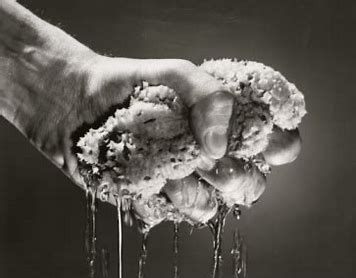
Nature of a sponge

sponge

Absorption

A sponge takes in
That from without
To its capacity.
It can be squeezed out.

A person takes in.
Some from without.
Some, simply self.

Self-absorption to its capacity
Needs squeezing out.
A soggy self am I.

Somehow, self-appreciation
Should balance who I am.
The bulk based upon The Bigger.

To achieve a healthy balance!
Most from Without!!
To maximum saturation.
Some from within.

A self takes in
To its capacity
A never ending thirst
I can be squeezed out.

Richard L. Brewer

Money is dangerous

I have been on a 5-year plan to get out of debt. I have been working on it for the better part of 25 years. I should be able to accomplish my goal in the future. If nothing else, I help keep the economy working. As they say, someone must do it. I play my role and play it very well.

As I think about years gone by, I remember my father telling me that money burned a hole in my pocket. I never saw the burn hole. I think I was afraid of the fire. I spent my money so quickly that there was no chance of the money kindling and blazing away. No charred britches to have to replace or explain away. I knew I would be in big, big trouble if I played with matches. I figured a burned hole in the pocket would suggest I have played with matches. Hence, a good excuse for spending my money so rapidly.

I have always had the reputation of spending money. It is true. I never was able to go into a store and not see something I just had to have. I walked in with money and walked out with merchandise. Good trade. It became much easier when plastic money was invented. They were called credit cards. Dangerous things, they be. Now those cards come with chips in them. I am not sure how the chips have improved the cards. They still work quite mightily and can facilitate racking up a whole ton of debt. They still do not require a PIN and I think they should. But, that is a blog for another blogsosphere. Back to the chips, they are best in cookies. I like crisp cookies.

Anyway, back to going into a store with money and coming out with merchandise. If only it was still that simple. One no longer must go into a store and exchange money or use that plastic card for merchandise. Nope, it is a jungle out there. The ole Amazon can fix you up quicker than the asp can say river. Even a one-click payment method. Yep, mighty convenient, I must say. And, a whole new level of dangerous.

Yet, as I think about it, I like the old-fashioned way of ridding myself of money. I had to earn it; and I had the money in hand, if only for a short time. If I wanted something special, I had to save. At a dime per week allowance, that meant a few weeks for something big. Of course, a dime back then was a small fortune. By golly, we picked up pennies back then. A nickel could buy a candy bar or, in a few places, a bottle of soda pop. Even at age 14, I could buy a 12 oz. bottle of RC and a Tiptop brownie for a quarter. At seventeen, I could get a two-burger meal at McDonalds and get change back from my dollar. Now, that rascally hamburgler demands a whole lot more; not that I eat at McDonalds, unless I am with the grandkids.

Back to the reason why I started typing in the first place. I have a plan to get out of debt. At the rate I am going it may be that my children get no inheritance. They may wind up with a ton of debt and a bunch of things I just could not leave in the store. I might just leave them a stack of plastic cards, too. On second thought, I am going to suggest they do as I once did: earn their own and spend it before it starts a fire.

Ironic Justice

gallows

Esther, an old testament book, tells the story of Esther who becomes an unlikely queen. She is a Jewess. Her people are captive to and subservient to the Persians. She is called upon to be an emissary of God to spare the Jewish people. Her uncle Mordecai is a pivotal individual in all the transpires. Mordecai had a mortal enemy by the name of Naman. Naman conspired to have Mordecai executed. Ironically, the gallows that Naman had prepared for Mordecai’s execution became Naman’s and Mordecai received the honor and recognition that Haman coveted. For Mordecai: no noose is good noose. For Haman, he found himself at the end of his rope.

Power’s Irony

Hanged from the gallows
In the hot morning sun.

Swelling and decaying
Flesh baked tender done.

Slipping from the noose.

Falling, splattering
Sending forth stench.

Now unrecognizable
Haman fills the sewage trench.

Having been a vulture.
He now feeds them full.
An ironic ending to power’s great pull.

Richard L. Brewer